


المدونة
Fair Play Standards and RNG Verification in Aviator Game for Canada

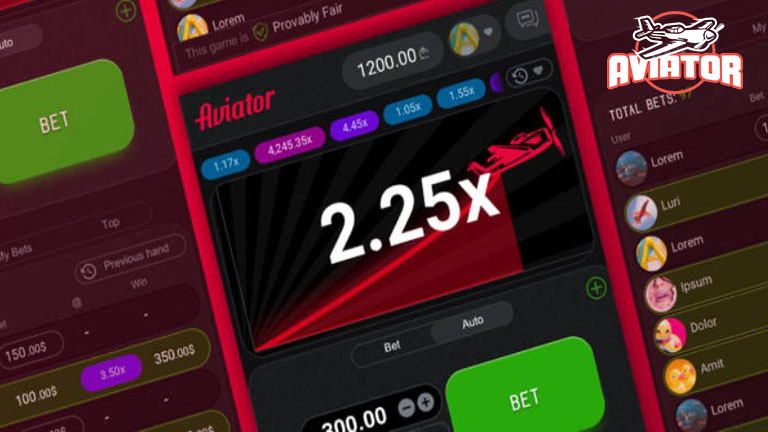
Talk about game integrity in Canada extends past the fine print; it’s really about trust. Take a game like Aviator. Its whole thrill relies on a multiplier that climbs and drops at a random second. That’s why fair play isn’t an extra feature here. It’s the bedrock everything else is built on. Canadian players today are sharp. They want to understand the inner workings, to grasp the mechanics determining their wins and losses. They’re asking the right question: Is this game actually random, or is it manipulated? This article explores the key systems that keep Aviator honest. We’ll focus on the strict verification of its Random Number Generator (RNG) and the wider world of provably fair tech. I want to give you a straightforward, no-nonsense explanation of how these systems work, who checks them, and what it means for you when you play. Getting a grip on these pillars is how you play with confidence, separating the real platforms apart from the untrustworthy ones.
The Foundation of Trust: Grasping RNGs within Aviator
Every digital game of chance is based on a Random Number Generator, and Aviator is no different. Consider the RNG as a complex algorithm. Its job is to generate a sequence of numbers or outcomes with no detectable pattern. For Aviator, this RNG is the unseen pilot. It dictates the exact moment the multiplier crashes in every round. Its integrity is paramount. It assures each flight’s result is unrelated to the last, unpredictable, and uninfluenced by anyone behind the scenes. For someone playing in Canada, this means the previous round’s crash has no effect on the next one. Nobody can predict the crash point, not even the people operating the game. Today’s RNGs are sophisticated pieces of tech. They often employ cryptography and seed data from chaotic real-world events, making them virtually impossible to crack. This setup creates a level field. The only thing you control is when you decide to cash out. Without a certified and audited RNG, the game’s core promise of fair chance falls apart. That’s why RNG verification is the non-negotiable starting point for any credible online game.
The Way RNGs Power the Aviator Multiplier
How the RNG operates in Aviator is easy to understand, but it’s important to get it. As soon as a new round starts, the RNG generates a random number. This number maps directly to a specific crash point. You see this number reflected in the ascending line on your screen—the multiplier that promises bigger payouts the longer it climbs. The second the multiplier reaches the value determined by that initial RNG output, the round ends. This whole process starts anew for every single game cycle. Bear in mind, the RNG ignores what you do. It doesn’t factor in your bet size, how many people are playing, or the time of day. It functions in a closed environment. This design ensures the game’s volatility and its Return to Player (RTP) percentage remain statistically stable over time. For you, the player, this is what creates that authentic rush. Opting to bank your winnings becomes a subjective gamble against a finish line that is truly random and entirely unknowable.
Key Characteristics of a Certified Game RNG
Accreditation bodies judge RNGs by rigorous standards, as not all are suitable for play. For an RNG to be approved in a regulated market like Canada’s, it must prove three core properties. The first is unpredictability. Past results cannot offer any clue about future ones. The second is balanced spread. Over a vast number of rounds, every possible outcome must emerge with statistically equal frequency. This eliminates any hidden bias. The third is repeatability. This one might appear odd, but for auditing, it’s essential. If you know the initial ‘seed’ value, you should be in a position to reproduce the entire sequence. This allows testers to verify nothing was modified after the fact. Independent labs conduct exhaustive tests using advanced statistical suites to examine these properties. When I examine a gaming site, I seek clear statements about these RNG certifications. Their existence is a strong indicator. It indicates the operator is serious about basic fairness, providing a mathematical foundation for the entire game.
Impartial Audits and Certification: The Third-Party Seal of Endorsement
A company saying their RNG is “fair” is just a assertion. It needs outside verification to mean anything. This is where independent testing labs and certification agencies enter. These third-party organizations, like eCOGRA, iTech Labs, or Gaming Laboratories International (GLI), act as impartial referees for the iGaming industry. Their job is to test the game’s program, especially its RNG, against global criteria. For Aviator, they conduct millions, even billions, of simulated rounds. They analyze the output data for statistical irregularities, verify the source code has no hidden vulnerabilities, and confirm the published RTP is precise. The end result is a formal certification document and usually a seal displayed on the gaming site. For Canadian users, that seal is a crucial trust signal. It means experts with no financial stake in the game have reviewed its fairness. It harmonizes the operator’s practices with the high demands of a market that cares profoundly about security and clarity.
The Information a Legitimate Audit Report Should Show
Real transparency means more than just saying an audit happened. It means sharing what the audit actually found. A reputable site featuring Aviator should make it straightforward to find, or at least mention, details from its certification reports. Players should seek a few key pieces of information: the specific RTP percentage that was confirmed, the name of the testing lab, the date of the latest audit, and the standard the game was tested against. Some comprehensive reports might even list the statistical tests used, like chi-square tests for randomness. If you cannot locate this information, regard it a warning sign. In my own research, I choose platforms that don’t conceal this data in legal jargon. They present it clearly, usually in a ‘Fair Play’ or ‘Game Integrity’ section. That openness shows a readiness to be held accountable. It turns a theoretical promise into a verified fact anyone can check.
- Confirmation of Reported RTP: Confirms that the calculated return-to-player rate is precise over an vast sample of simulated rounds.
- RNG Output Analysis: Confirms that the number streams show true statistical randomness with no deterministic patterns or cycles.
- Game Logic Review: Guarantees that the code managing the multiplier trajectory and crash system accurately executes the target mathematical model.
- Security Protocol Check: Verifies that the game client and server interact safely and that the RNG seed data is protected from interference.
Provably Fair Technology: A Player-Centric Verification Tool
Traditional RNG audits are conducted by experts off-site. But a different approach, called “Provably Fair” technology, enables you to run your own mini-audit on every round you play. This notion came from cryptocurrency and blockchain gaming, and now forward-looking crash games like Aviator are adopting it. The foundation is cryptographic transparency. In a Provably Fair system, the server generates a secret seed (a starting value for the RNG) and a public seed for each round, often with input from the player. These combine to decide the crash point. Here’s the essential part: the server’s secret seed is hashed—cryptographically scrambled—and shared before the round begins. After the round completes, the original secret seed is revealed. You can then use tools on the site to check that the hashed seed matches the revealed seed, and that this seed correctly produces the crash point you saw. This process demonstrates the operator didn’t change the outcome after seeing how people bet.
The Detailed Verification Procedure for Players
Using Provably Fair technology tech can seem complex, but trustworthy platforms simplify it. Here’s how a player from Canada commonly navigates it. At the start of your play, you receive a distinct ‘client seed,’ or you can generate your own. Right before each Aviator round begins, the game displays a ‘server seed’ in its hashed format. You play the round, and the multiplier ends. Afterward, you can access a ‘Provably Fair’ validation page, commonly found in the game’s support section or website footer. On that page, you input the round ID, your client seed, and the now-unveiled original server seed. The checking tool runs the process. If the output matches the crash point you observed, and the encrypted server seed corresponds to the one displayed beforehand, the round is verified as fair. This direct ability transforms your role. You’re not anymore just a gambler; you’re an proactive verifier. It creates a powerful layer of trust through individual, cryptographic proof.

- Seed Generation: Prior to the round, you receive or create a client seed. The server produces its own secret seed and shares its cryptographic hash.
- Round Play: You place your bet and watch the Aviator round progress to its crash point, which is decided by an algorithm mixing both seeds.
- Seed Reveal: Post-crash, the platform reveals the original, unhashed server seed employed for that specific round.
- External Verification: You employ the platform’s open-source verification tool, entering the round details and seeds to verify the outcome was pre-set and untampered.
The Licensing Framework: The Canadian Context
Across Canada, the framework for fair play is tied directly to licensing and provincial regulation. The country does not have one national regulatory body. Rather, every province manages its own gaming landscape. Regulatory bodies like Kahnawake Gaming Commission, the Alcohol and Gaming Commission of Ontario, and British Columbia Lottery Corporation set and enforce the standards for operators in their regions. For Aviator to be legally available to Canadian players, particularly in a regulated market like Ontario, the operator must obtain a license from the appropriate authority. Obtaining such a license is a rigorous process. It demands all games, including their RNGs, to pass certification from approved testing labs. Regulators also establish standards for safeguarding player funds, providing responsible gambling tools, and complying with anti-money laundering rules. So when I check an Aviator game’s credibility for Canadians, checking for a valid license from a recognized Canadian authority is as critical as checking its RNG certificates. This indicates the operator is under continuous supervision and confronts real legal consequences if they violate fairness standards.
The Role of the KGC and Provincial Bodies
The KGC (KGC) is based in Mohawk Territory of Kahnawake. It has been a major licensor for international online gaming operators, including many that accept Canadian players. Its endorsement demands operators adhere to strict technical and operational standards, including RNG verification. Concurrently, the newly regulated iGaming market in Ontario operated by the AGCO embodies a more direct provincial model. The AGCO holds an extensive list of approved game suppliers. Every single game variant must be registered individually and tested. Thus for Aviator to appear on an Ontario-licensed platform, it has passed the AGCO’s technical rules. Such regulators do more than just issue licenses. They carry out ongoing compliance reviews and operate channels for player complaints. This oversight ecosystem builds a multi-layered safety net. It means a game’s fairness isn’t just checked once by an auditor. It is constantly overseen by an organization with real regulatory power, providing a strong institutional layer to the assurance of fairness.
Player Responsibility and Spotting Red Flags
Robust systems exist to ensure fairness, but players must do their part too. Recognizing the signs of a credible platform is a essential skill. In addition to checking licenses and audit seals, be aware of certain red flags. A total lack of transparency about game rules, RTP, or certification details is a serious concern. Platforms that make exaggerated claims about “beating the game” or sell assured win strategies are often misleading players. A genuinely random game cannot be accurately predicted. Also, be cautious if you cannot locate responsible gambling resources, or if the terms and conditions—especially about withdrawals—are ambiguous. This can suggest a wider disregard for player welfare. My own practice before depositing funds is to check these elements. I check the licensing info at the bottom of the site. I search for the game’s “info” or “help” section to discover the RTP. I confirm that independent audit logos are active links leading to real certification reports. This essential due diligence is the final, practical step to playing games like Aviator Game Live securely and with certainty.
Actionable Steps for Canadian Players to Confirm Fairness
Taking a proactive approach on game integrity means performing a few concrete things. Any Canadian player can do them. First, investigate the platform’s license. Make sure it’s from a recognized authority like the AGCO, KGC, or another reputable jurisdiction. Second, find the game rules and RTP. A legitimate operator will always provide the theoretical Return to Player percentage for Aviator. It’s generally around 97%, though it can vary a little. Third, verify the audit claims. Click on the testing lab seals on the website. They should link to a current certification report or at least a status page on the lab’s own site verifying the partnership. Fourth, if the site uses a Provably Fair system, set aside five minutes to check a past round. This practical test is the most direct proof you can get. Finally, look at player communities and forums. Regular reports from other Canadians about unresolved problems or dubious practices are priceless real-world information. Adhering to these steps shifts you from hoping a game is fair to knowing you’ve done your part to verify it.


 واتساب
 إيميل
إيميل